From Commuter Student to Campus Leader: How Dialogue Helped One Siena Student Find Her Voice
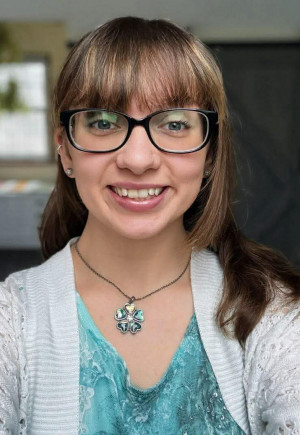 When Talia Narzymski '26 first arrived at Siena College, she was looking for a close-knit community where she could grow academically and personally. As a commuter student majoring in Forensic Psychology with a minor in Criminal Justice and a certificate in Community Development, she found that community at the Damietta Center for Student Leadership and Community Development.
Today, Narzymski is continuing her journey in Siena's two-year Master of Social Work program, but she credits much of her personal and professional growth to the opportunities she found through the Damietta Center.
"Damietta gave me the space to learn without judgment," Narzymski said. "It was a place where I could make mistakes, receive meaningful feedback, and continue growing with confidence."
What began as an opportunity to get involved quickly became a transformational leadership experience. Through the Center's dialogue initiatives, Narzymski discovered strengths she never knew she had. She learned to facilitate challenging conversations, design and lead workshops, coordinate campus events, deliver public presentations, and mentor other students in dialogue practices.
"I never imagined myself willingly speaking in front of groups, creating and facilitating networking events, or teaching dialogue skills to others," she said. "Damietta challenged me to step outside my comfort zone and become the kind of leader who empowers others."
One of the most influential experiences for Narzymski was helping develop Café Damietta, a student-led dialogue initiative designed to bring members of the Siena community together for meaningful conversations across differences. Through the program, she learned that the purpose of dialogue is not to persuade others but to understand them.
"One of the biggest skills I developed was learning to approach differences with curiosity instead of defensiveness," Narzymski explained. "It can be difficult to have conversations with people whose beliefs or values are very different from your own. Through dialogue, I learned that the goal isn't to win an argument or change someone's mind. It's to understand how their experiences have shaped the way they think."
She believes those conversations create opportunities for growth by encouraging participants to ask thoughtful questions, listen actively, and seek understanding before judgment.
"Dialogue creates space for multiple perspectives," she said. "Even when people disagree, they can still work together to address shared challenges."
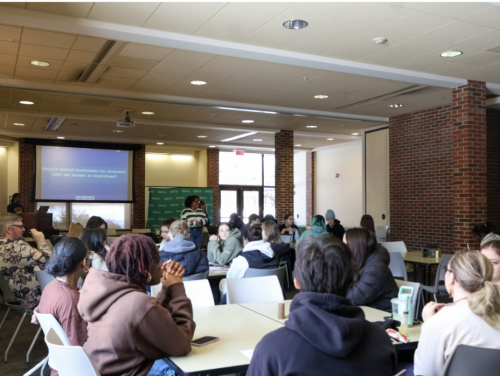
Narzymski also credits Siena's faculty with helping expand the impact of dialogue across campus. Professors from disciplines including sociology, philosophy, social work, criminal justice, first-year seminar, experiential learning, and even true crime courses invited the Damietta team into their classrooms, allowing students to experience dialogue in ways that connected directly to their fields of study.
"One of my favorite parts of Café Damietta was adapting our workshops for different academic disciplines," she said. "It showed me that dialogue is valuable in every profession because every profession involves working with people."
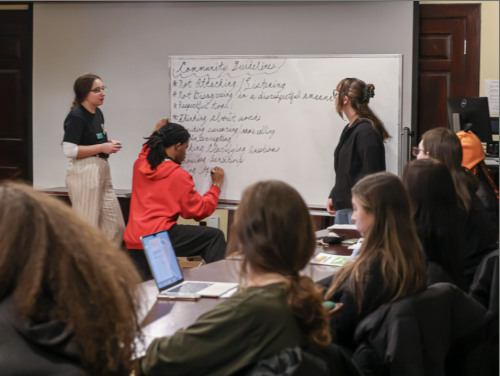
For Narzymski, the experience extended far beyond developing communication skills. Dialogue fundamentally changed how she sees the world.
"It opened my eyes to the pressures and barriers people face that I didn't recognize before," she reflected. "I became more aware of the invisible challenges that shape people's lives and experiences. That awareness has changed the way I approach others, and it has given me the ability to advocate for people in ways I never could have before."
That perspective naturally complements her future career in social work, where empathy, advocacy, and relationship-building are essential.
Reflecting on her Siena experience, Narzymski says one lesson continues to guide her leadership philosophy.
"One person truly can make a difference," she said. "The knowledge and skills you gain don't stop with you—you pass them on to others. It's not enough to simply plant a seed. You have to help nurture it so others can grow alongside you."
As a commuter student, Narzymski says the Damietta Center became much more than an extracurricular involvement.
"It gave me more than a place to spend time between classes," she said. "It gave me a community. It became a home away from home—a place where I felt welcomed, supported, and encouraged to grow. It gave me a place physically on campus, but more importantly, it gave me a place emotionally as a Saint."
Today, as she continues her education in Siena's Master of Social Work program, Narzymski carries with her the dialogue skills, leadership experiences, and commitment to service that began at the Damietta Center. Those experiences continue to shape not only the professional she hopes to become, but the kind of person and leader she strives to be—one who listens first, seeks understanding, and empowers others to find their own voice.