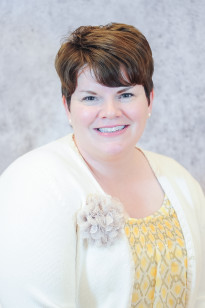
Dorinda D. Bolander
Lecturer in First Year Seminar
Professor Bolander has a degree in Accounting from Marist College and a Juris Doctorate from Albany Law School. She has over 25 years of experience in accounting, business, operation management, and tax research and is a published author regarding legal issues in international law and environmental law. Her interest lies in exploring the legal and ethical parameters surrounding the business world today. Outside of the classroom, she is an avid horse lover and outdoor enthusiast and enjoys living on her horse farm with her husband and four children.
How will you apply your morals to real world situations while considering the Franciscan values of Diversity, Optimism, Respect and Service?
This seminar focuses on the evolution of human rights and explores the interaction of ethics and morals and how these two fundamental ideas shape our behavior. In this class we will engage in discussions surrounding significant moral and ethical issues which have shaped our society.
Through case study, debate, and the presentation of real-life ethical dilemmas, students are encouraged to find a voice and to develop their ability to articulate and defend their perspectives. Through this exploration, students will develop their research skills, their awareness of current topics, and their abilities to communicate orally and through writing in a collaborative atmosphere.
Kelly D'Souza is an instructor in the First-Year Seminar program. She holds a Bachelor's degree in English and Education from Siena College, a Master's Degree in Education from SUNY Potsdam, and a Master’s Degree in English from University at Albany.
What does it mean to be a hero? From superheroes to news stories, we are drawn to tales of heroic deeds. How has our understanding of heroism changed through the ages, and what does it mean to be a hero today? Through the themes of Heritage, Nature, Diversity, and Social Justice, we will examine how heroes impact our daily lives and the values that we prize.
“You are what you eat” might be a common phrase, but does it reflect the realities of how food impacts us? In the course, we will explore the ways that the foods we eat connect to who we are and how we navigate the world around us. Through texts that address issues such as the impact of cultural foods and family traditions, sustainable food production, food security, and more, we will more deeply understand heritage, the natural world, diversity, and social justice.
Dr. Catherine Engh received her PhD in English from the CUNY Graduate Center. She has taught a range of undergraduate courses, many of which have focused on questions of nature, social justice, and cultural representation. In her role as researcher, she explores these topics as they arise in British Romantic writing; her scholarship in Romanticism has appeared or is forthcoming in English Language Notes, The Wordsworth Circle, and European Romantic Review. As a first year seminar professor, she loves seeing students develop as readers, writers, and individuals who take charge of their own learning.
In this class, we will consider the role of storytelling as a means of environmental inquiry and activism. Reading a range of works, we will ask: How do stories organize the relationship between human beings and the living world? What’s more effective in environmental storytelling: hope or fear? What do problems such as pollution and climate change have to do with the Franciscan values of heritage, diversity, and social justice?
Anne Godson-Glynn is a Siena graduate and veteran First-Year Seminar, English, and writing instructor. She is also a former administrator who served as the Siena College Writing Center director for many years. Professor Glynn holds degrees in History and English and is currently pursuing her doctorate in Education at Northeastern University. Her research interests include anti-racist pedagogy and culturally sustaining teaching and learning.
In this seminar, we'll examine the history of systemic racism in the United States and the non-violent social justice initiatives developed in response. Special attention will be paid to change agents whose stories are rarely included in history books. How did they develop into leaders who empowered others to push for reform or abolition? What is the legacy of their work? What can today's changemakers learn from their stories? Together, we'll ask these questions and many others as we look from the past to the future to discover the depth and breadth of anti-racist activism in the 20th and 21st centuries.
Dr. Haas, Co-Director of First Year Seminar, is an historian specializing in American public policy, who is also interested in culture, gender, and international relations. She has been awarded grants for her research and awards for teaching excellence.
Both men and women are invited to take this course, which will critically analyze what writers, activists, thinkers, and artists have to say about Heritage, the Natural World, Social Justice, and Diversity in order to understand if and how women’s perspectives about these ideas differ from men’s. Looking across time and across geographical boundaries, we will examine how women are valued (or not) in each of these four topic areas, paying particular attention to the roles women play, the policies they advocate and/or are the targets of, and the images of women presented through literature, music, art, media, etc. in order to gain a better understanding of the complex, gendered world in which we live.
Music provides the soundtrack for our lives. It is all around us. And yet, what do we really know about it? This course seeks to critically address that question. We will explore how music both shapes and is shaped by our culture and cultures beyond the United States.
Kraig Larkin is a graduate of the University at Albany where he studied History and Psychology before receiving his Ph.D. in History from Stony Brook University. He teaches in the First Year Seminar program and History Department at Siena College, having previously taught at the University of New Hampshire, Colby-Sawyer College, and Stony Brook University.
Recent controversies surrounding players kneeling during the national anthem in the United States or at the start of soccer games in the English Premier League, pay inequity debates between men's and women's sports at the professional and collegiate levels, and efforts to restrict the participation of transgender athletes in high school sports are just a few examples of how sports often functions as a space for broader social, political, and cultural debates. This course will explore the intersections of sports & politics through the lenses of Heritage, the Natural World, Diversity, and Social Justice. In doing so, we will seek to understand the evolving role of sports in society, as a source of identity, and a site of social and political change.
This seminar focuses on the meaning and evolution of human rights from a variety of perspectives. What are human rights and how did this category of rights come into existence? Who has human rights and what happens if such rights are violated? What role have they played in the past and in the twenty-first century? We will use an interdisciplinary approach to think about these and other questions related to human rights. We will explore the subject of human rights in relation to Heritage and the Natural World during the fall semester, and Diversity and Social Justice in the spring term.
Dr. Michelle Liptak is a Senior Teaching Professor in First Year Seminar and Co-Director of the program. She has been teaching writing, literature, and women's studies at Siena since 2001 and is the co-founder of Gleanings: A Journal of First-Year Student Writing. She regularly presents her work in pedagogy and literary studies at regional and national conferences, has received several grants for course development, and specializes in theories related to gender and trauma.
In this course, we will explore traumatic experiences - both real and fictional - that are shared through various forms of storytelling. Thinking of trauma as a signal or mark of oppression and subjugation, we will carefully consider whose stories are represented and remembered (and whose are not) while also examining the role of larger social, political, economic, and cultural influences and institutions. Some of the issues that will be explored while "reading" narratives of trauma and triumph include: memory (individual, collective, and cultural), bearing witness, testimony, loss, responsibility, and survivorship.
Stories matter. And there are a number of matters to talk about when it comes to stories because humans are “storytelling animals.” Stories pervade our world - sometimes in obvious and in unrecognizable ways. In this seminar, we will explore how stories are told to us in a variety of forms as well as how they shape and express who we are individually, communally, and culturally. We also will consider how we share our own stories, with whom, and why (or why not). Throughout the year, responses to these and other questions will be discussed: Who is telling the story? What is the main message? Who is the audience? Whose story is it? How is it being shared? Whose story is missing? What is missing from the story? Has, will, should this story endure? Follow-up questions will always include those highlighted in our FYSM writing manual, They Say/I Say: Why? So? Who Cares?
Dr. Nadeau is a Teaching Professor in the First Year Seminar program. She has developed and taught courses focusing on her interests in English Language Learning and teacher education, with emphasis on language and education issues faced by immigrants and refugees in the US as well as English language as a means of access to the global community. Dr. Nadeau is also an ardent adherent to the Franciscan values of care for creation including marginalized people, operating a small urban farm and food pantry at her home in Cohoes.
In his 2015 Laudato Si’ encyclical, Pope Francis connects deeply with two core Franciscan values: the poor/excluded/marginalized and creation. Pope Francis speaks about the cry of the poor and the cry of the earth as one interrelated crisis, linking ecological justice and social justice. Now, Siena College is privileged to house the Laudato Si’ Center for Integral Ecology, an office whose objectives include care for creation, sustainable living, and advocacy for environmental and social justice. Members of this classroom community will work closely with the Laudato Si’ Center to explore the values and practices of St Francis and ways we can apply them in our lives, as well as encouraging their global application for the good of all creation.
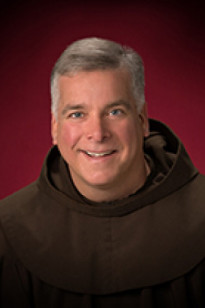
Fr. Kenneth Paulli, O.F.M. is a Franciscan priest, a longstanding member of the First Year Seminar faculty, and a tenured professor in the College’s Department of Education. He holds earned degrees from Siena College, Washington Theological Union, and Columbia University. A Siena graduate himself, Fr. Paulli is passionate about teaching First Year Seminar. Many of his students speak about him as “dynamic” and “supportively challenging” in the classroom. In addition to his teaching, Fr. Paulli is a published author, including his 2018 book, Outside the Walls: Encountering God in the Unfamiliar. He is currently working on another book. Off the Siena campus, Fr. Paulli is an avid golfer, and “weekend chef.” During the summer months, he enjoys spending time on the shores of New Jersey and Rhode Island.
Inspired by St. Francis of Assisi’s life, in particular, his choosing to leave that which was familiar and comfortable in order determine what he was meant to do in this life, Fr. Paulli’s sections of First Year Seminar will focus on a variety of works all of which deal with what social scientists call, “Social Dislocation.” In other words, his sections will work with a variety of texts in which men and women “leave” in order to discover who they are and what they are supposed to do in this world. Questions to be considered throughout the year include: Is it necessary to leave home in order to figure out who you are and what you are supposed to do in this world? In this age of technology and social media, which make maintaining connections with family and friends so easy, is it even possible to leave home? And if it's not, what does that say about our development as human beings?
Our year-long work together will be framed around the four themes of the College’s Core Curriculum: Heritage, Natural World, Diversity, and Social Justice.
Jeff Simonds received his Masters of Fine Arts in Creative Writing from Goddard College in 2013. Since then, he has taught Composition and Creative Writing courses at Siena College, Hartwick College, and Holyoke Community College. His short fiction has appeared in Pif Magazine, Alexandria Quarterly, and The Amateur Masters. In 2014, he put out his first short story collection: You Are Not Allowed To Come Back After.
Why are we interested in true stories of murder, violence, and survival? Is it to prepare ourselves if we ever face the same kind of evil (learning these stories “could be like a dress rehearsal,” according to Dr. Sharon Packer, a professor of psychiatry and behavioral sciences)? Do these stories give us an adrenaline rush? Do we learn violent stories out of sympathy for the victims (or relief we are not the perpetrator)? With the popularity of podcasts like My Favorite Murder and Serial, docuseries like Making A Murderer and The Staircase, or books like Mindhunter and I’ll Be Gone In The Dark, it is clear that our cultural fascination is not waning. In this class, we will examine why these stories interest us, what we can learn from them, and how these stories of criminality shape us and our society.
TRIGGER WARNING: While this class will not dig too deep into the most horrifying details of murders, this is a class about true crime — and as such, there will be mentions of violence against women, abuse, and other triggering topics. Prof. Simonds is available to speak with anyone nervous about content.
Everyone has a story to tell— and few things broaden the scope of our understanding, empathy, and humanity more than sharing stories. Given the popularity of storytelling podcasts like The Moth, This American Life, StoryCorps, or RISK!, storytelling is not just something we do with our friends and family, but an art form that can inspire and change an audience. This class will explore the history and the power of storytelling, but also experiment in organizing our own experiences and relationships into our own stories. We will look at the power of a story-- both as the audience and as the tellers-- and students will have the opportunity to explore and develop their own stories through writing and performing. There is no limit to what can be learned from sharing a good story.
Dr. Stein is an instructor in the First Year Seminar Program. She has a BA in English from Tufts University, an MA in Secondary English Education from Columbia University Teachers College, an MA in Educational Leadership from the College of St Rose, and an Ed.D in Educational Leadership from Russell Sage College. Her research centers on the promotion of social justice education as a demand for equity for all students.
This course will be an exploration into the topics and ideas that have at one point or are currently restricted, disapproved, frowned upon, off limits, and taboo. Students will read, write, think, and discuss to develop ideas about how the values of society are reflected in human resistance. The course will demand an open mind, sustained focus, intelligent judgement, and fearless inquiry into sometimes sensitive topics.
Dr. Lara Whelan is an Associate Professor of English at Siena and formerly served as Dean of the School of Liberal Arts. She earned her Bachelor's degree in English from Dartmouth College, her MA in Victorian Studies from King's College, London, and her PhD in English from University of Delaware. She has taught rhetoric and writing to first-year students since 1993, and it is one of her favorite parts of being an English professor.
What makes a perfect world? Is there any perfect world that is compatible with human nature? Or is it due to human nature that we may someday see the opposite -- a dystopia -- on the horizon? And if so, what would that look like? In this seminar, we will explore all of these questions and more by reading both utopian and dystopian fiction that addresses controversies in ethics, economics, science, philosophy, the environment, nature v nurture, and the push and pull between individualism and community.