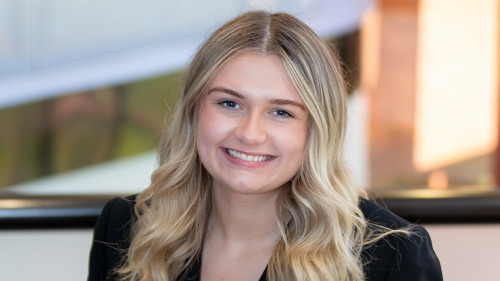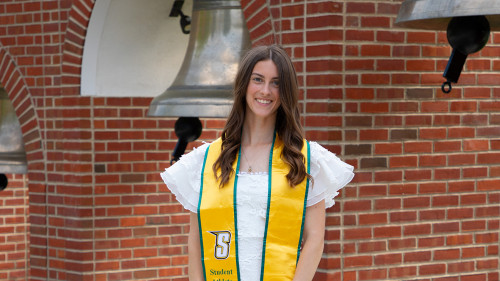
After a downpour, surface level contaminants often find their way into wells, and from there, it's a short ride through the pipes, out the faucet, and into a drinking glass. The difference between clean drinking water and E. coli tainted water is imperceptible to the naked eye. Thankfully, we've got Ashlee Jensis '26.
"I've performed thousands of water tests. Over the summer, I could be doing as many as 60 to 70 per day."
The environmental studies major, who will graduate next month, has an internship with the Capital Regional Environmental Lab, which specializes in water testing. Municipalities, public water systems, neighbors with private wells - they all have a responsibility to routinely screen their drinking water for bacteria. All they need to do is drop off a sample of at least 100 milliliters with the lab; Jensis handles the rest.
"I shake in chemicals and wait until they're dissolved. Then I seal it, and place it in the incubator for 18 to 24 hours. If the sample comes back clear, it's negative."
Jensis estimates that a quarter of the time it's not clear. That's actually what makes the job so rewarding.
"It's not fun to report the bad news, but I know that the work I'm doing is preventing people from getting sick."
Jensis has always been committed to environmental studies, but she only recently developed a passion for water testing. Kate Meierdiercks, Ph.D., professor of environmental studies and sciences, is to thank.
"I took Analysis of Soil, Air and Water with Dr. Meierdiercks and we did this semester-long project. We tested for lead in all of our homes and it was fun. Just seeing the machinery, and going through the process of learning the analysis, I realized this is what I want to do."
The internship confirmed the decision. Jensis says she's able to do more testing than other interns and she credits her Siena education for that. Next, she plans to pursue similar work after graduation, and when there's bacteria in the water, or when E. coli finds its way into a well, Jensis will catch it. That's how she's going to make a difference, by keeping the water in your glass safe.
"ENVA 480 is one of my favorite courses to teach because students design and conduct real-world environmental investigations, from posing research questions, collecting field samples, and analyzing their data in the lab. Course-based projects like the one Ashlee participated in are wonderful opportunities for students to get hands-on experience, build skills, and explore possible career paths."
Kate Meierdiercks, Ph.D., professor of environmental studies and sciences
Want help finding an internship? From employer events and career fairs/expos to 1:1 appointments, The MacDonnell Career and Internship Center equips students with the tools to turn their goals into internship and career success. Start your journey today by scheduling an appointment.