In Finance 435, the stakes – and the stocks – make it feel like Wall Street.
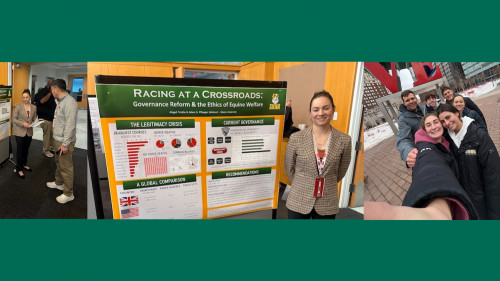
2017 was the year of the fidget spinner. The three-inch toy was just about everyone's fascination, including middle schoolers. Only thirteen at the time, Ryan Grimmick '26 (above, 3rd from right) smelled opportunity.
"I've always been interested in money, and I started hustling early. At first I'd knock on neighbors' doors and offer to shovel driveways and mow lawns for cash. And then in the 7th grade, fidget spinners became the thing."
Grimmick convinced his mom (by picking up additional chores around the house) to buy the spinners online in bulk at about five bucks a unit.
"Then I'd sell them for $10. It was basically a 100 percent markup, and I generated a pretty good cash flow at 13. My mom was proud to see I was getting experience with money."
Grimmick faded fidget spinners before their demand tanked, and in high school, he started flipping a higher-end product – sneakers.
"I'd use my Christmas money to buy new, limited releases, or I'd buy used shoes third party and clean them up. I could re-sell a pair of shoes and make between $50 and $100. I probably cleared $4,000 on sneakers."
Grimmick, a finance major and member of the rugby team is no longer hunting for scuffed sneakers. He's combing the Russell 2000 Stock Market Index for overlooked stocks that are ready to pop. Finance 435 Student Managed Fund puts students in charge of the Bjorklund Fund, which has more than quintupled in size since the original $100K investment 20 years ago. Eligible Saints, with an A or B in Finance 315, use advanced valuations and research techniques to select securities for the Bjorklund portfolio.
"We use the Bloomberg terminals (in the Williams R. Raub '85 Market Trading Room, part of the Douglas T. Hickey '77 Financial Technology Center), and I've learned so much. We get to see what the market is doing live, and we get news that most people don't have access to. We're really getting that Wall Street knowledge."
For the final project in December, the students work in pairs and choose a stock they believed should be included in the Bjorklund portfolio. They conducted in-depth quality analysis using Bloomberg and Capital IQ databases to develop the financial information needed to estimate the value of their company. Then, they make their pitch to the class and their instructor, Rick Proctor, Ph.D., associate professor of finance. Following the presentations, the students individually voted on their top two picks, and Proctor will use their input to manage the portfolio. Grimmick and his partner, Brendan Coyle '26, made a case for GigaCloud Technologies.
"This course requires students to apply the tools of financial analysis they've learned from their previous finance courses while incorporating newly learned, more advanced, valuation principles and techniques," said Proctor. "Valuing real companies and then investing real money in the chosen stocks makes this course so much more impactful than a typical investment course, which gives our students a huge competitive advantage when they go out on the job market. Ryan finished with the highest average in the class, and the stock that he and Brendan recommended is already up about 10% since they picked it only a month ago!"
Grimmick, who would like to move into private wealth management, says he's a saver, not a spender. The fidget spinner and sneaker money has compounded several times over in a Robinhood account since high school. And just recently, Grimmick added a new stock to his personal portfolio: GigaCloud.
"Yeah, I bought a few shares. I really do like its upward potential."
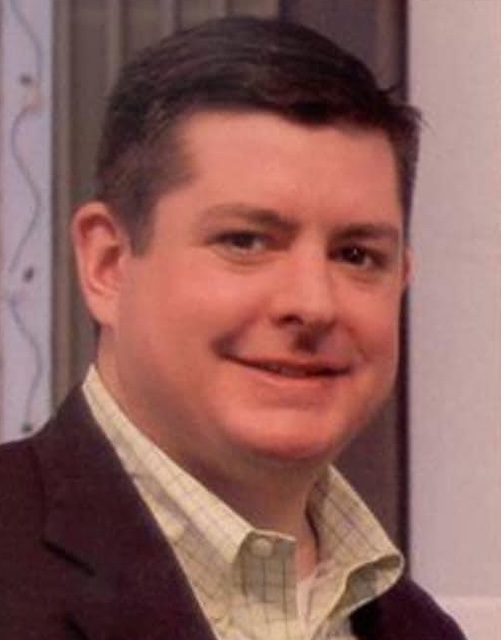
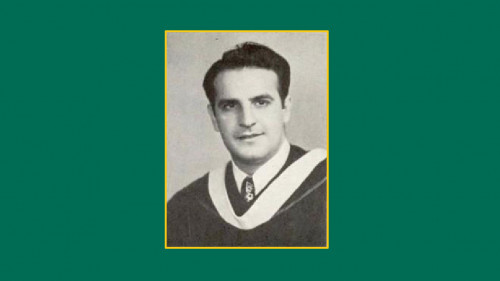
David Bjorklund
David Bjorklund (left) worked in the bond department at Morgan Stanley, and in 2006, he was preparing to make a career change. Bjorklund had a job lined up with the federal government to investigate terrorist money trails, but he never got the chance. He was killed in a car accident at 35 years old.
Later that year, Ron Bjorklund '85, vice chair of the Siena Board of Trustees, and his wife, Cathy, gifted the University $100,000 to seed a new investment fund for high performing finance majors. The donation was made in David's memory.
That $100,000 gift has grown to $621,183 (as of January 14) through investments in relatively smaller companies, generally with a stock market value of $20B or less. The benchmark for comparison is the Russell 2000 Index. Over the 20 years since the fund's inception, the Russell 2000 has had an average annual compound return of 6.66%, while the Bjorklund fund has averaged an impressive 9.30% average return.
"Honestly, Cathy and I thought the students might lose the money during the first year on speculation, but at least the experience would be valuable. Little did we realize the success they would have!
I can’t help but think that David has had a hand in the successful trades the students have made since the fund’s inception. Cathy and I couldn’t be prouder of what the students and professors have accomplished over the past 20 years.
We're overwhelmed with gratitude to know other alumni have continued to support the fund and that David’s name lives on with such a worthy endeavor at the University."
Ron Bjorklund '85, vice chair of the Siena Board of Trustees