Where Does Our Garbage Go? A Visit to Our Local County Waste
Written by Isabella DeGrasse 27’
As a part of my ongoing project examining waste and recycling practices on campus, I have been working to better understand not just how waste is disposed of at Siena, but what actually happens after it leaves our bins. Throughout the process, I have found that many of the challenges surrounding waste practices on campus do not stem from a lack of concern but from a lack of clarity. This past Earth Day, a visit to the Albany County Waste facility with the Laudato Si’ Center provided an invaluable opportunity to bridge the gap between intentions and the reality of the system we are part of.
“[Non-recyclables] wreak havoc on our machinery,”
says maintenance manager, Damion Davis, who gave us our tour. It was a simple statement, but it framed everything that followed.
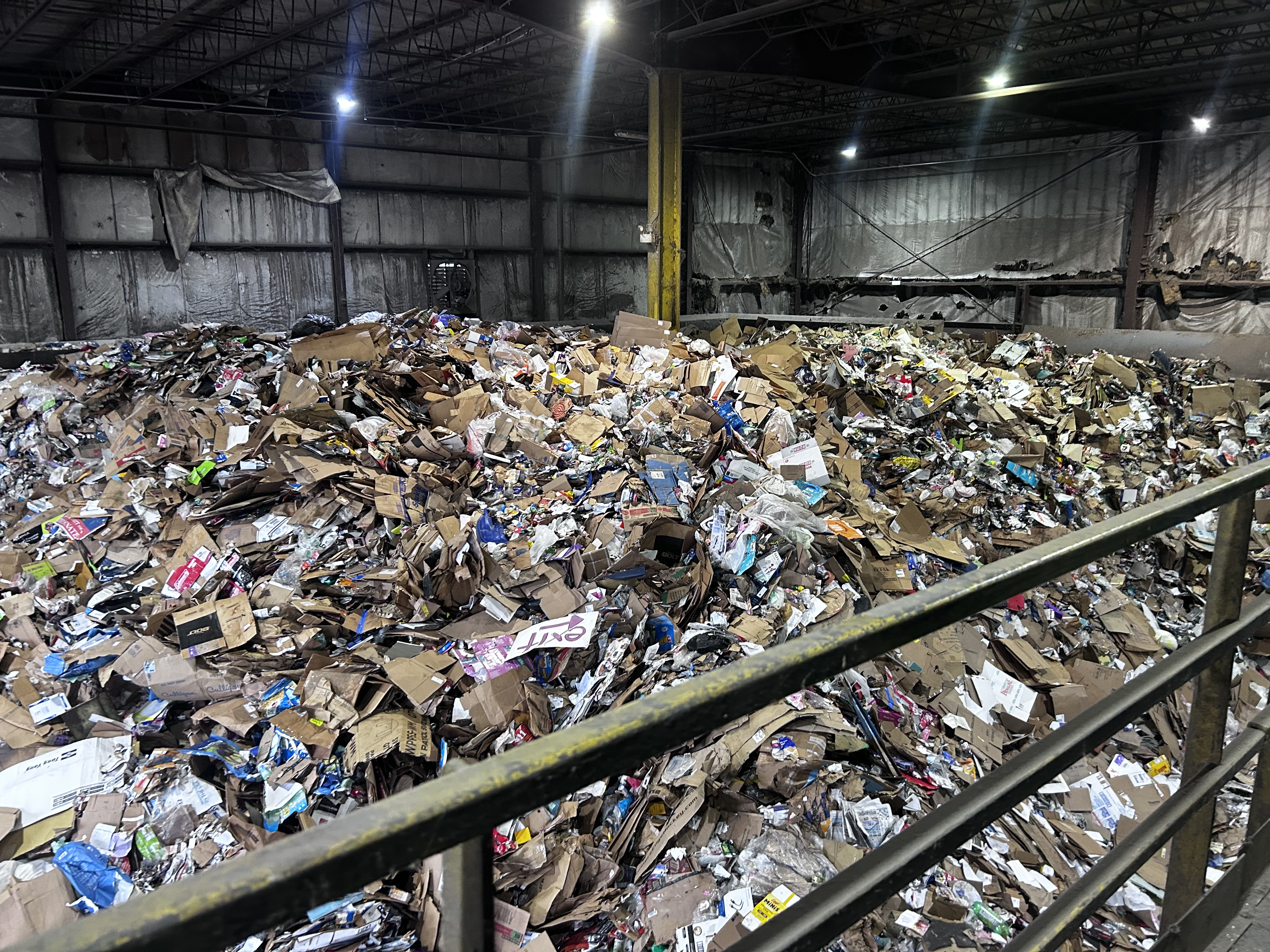
When we first entered the plant, we saw this, the start of their process. Davis exclaims, “Oh yeah, all of this [and more] will be done by 4 pm today.” Davis oversees a little under 100 employees who currently man the operations that process not only Siena’s recycling but also that of 12 other counties in New York. He and his employees run a fast-moving process, constantly trying to correct for improper use of our recycling bins.
So, what does this process look like?
Once items are brought in by massive truckloads, they are moved onto a conveyor belt, in a process they call pre-processing, where workers manually remove contaminants. This is where they find the most shocking items, as you can see below on the left-hand side of the image, an RPG and many other miscellaneous items were found.
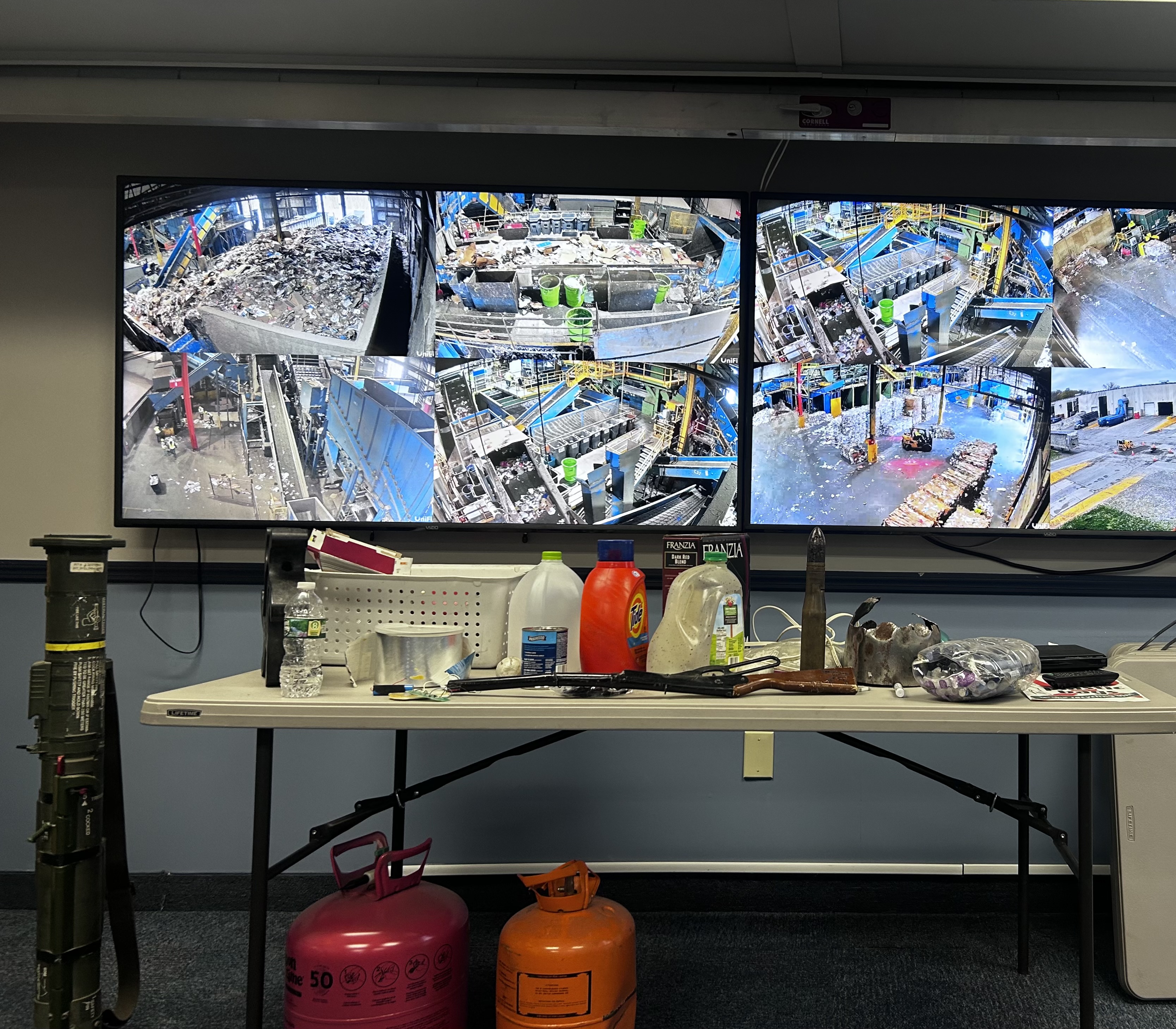
Once that is completed, they get sent to another conveyor belt where magnets pull out metal items like aluminum and tin. Then, they are moved along the line to another area where air jets separate lighter materials like paper from the other heavier items. Lastly, the materials are run below specially automated cameras with robotic arms that can quickly scan, identify, and remove recyclables with surprising speed. For instance, one machine alone can process roughly 800 items per hour, compared to about 100 by a very fast single worker. Davis shared that this entire process can be referred to as the “washing machine effect”
Despite this technology, the system is still very sensitive to contamination. Something as simple as the plastic garbage bags you see in the trash bins and in the dumpsters here on campus can clog and severely damage the machinery. So, as a protocol, when the bags reach the first pre-processing conveyor belt, they are diverted to the landfill, as ripping them open slows their operations.
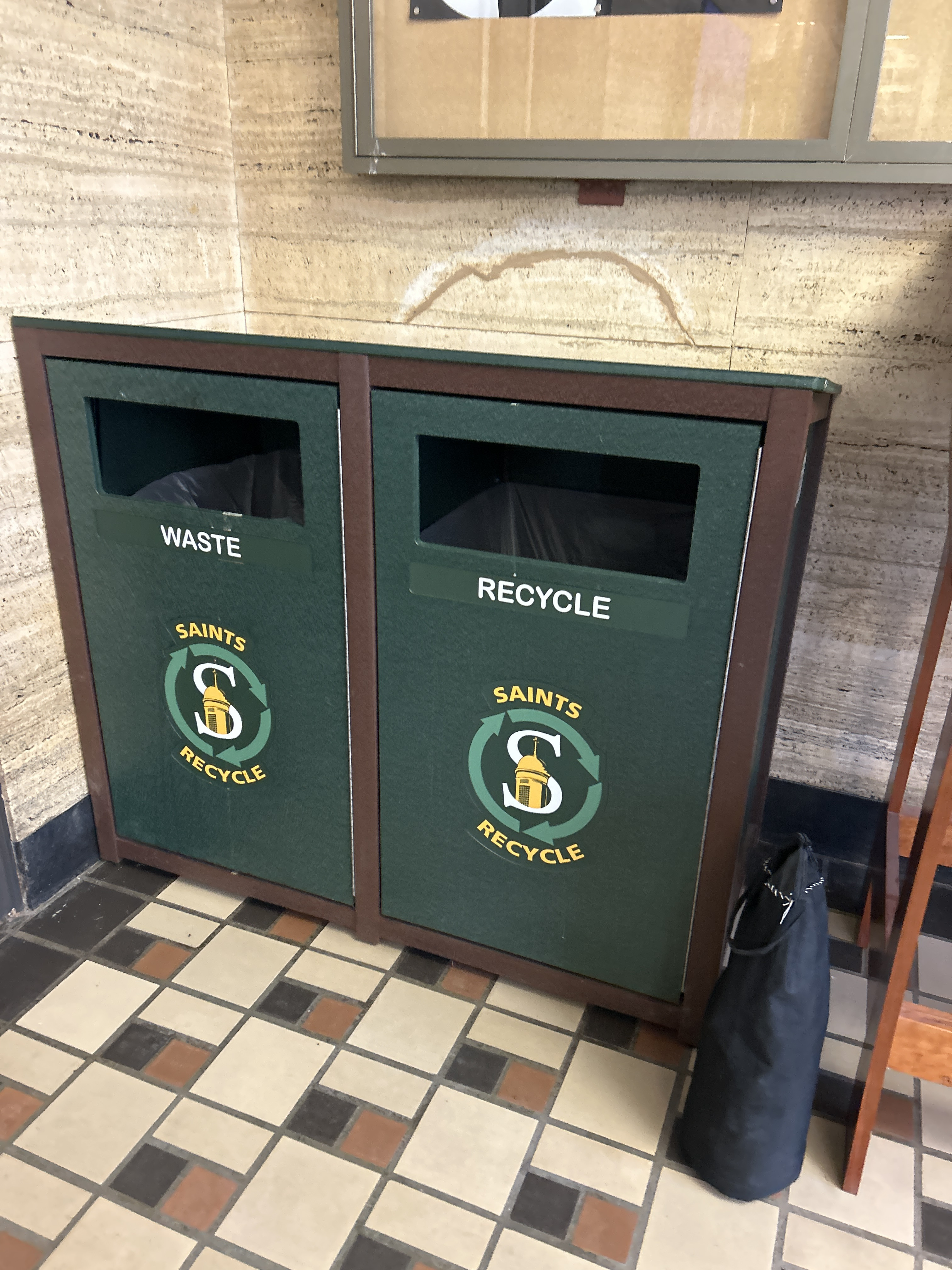
By the end of the line, items have been neatly sorted by material in different bins, with plastics being separated by their plastic recycling symbol. County Waste accepts and processes all plastic items labeled with recycling codes 1 through 7, often found on the bottom. Machinery then compacts these materials into large bales (first image), which are then sent to manufacturers to be turned into new products. For instance, many of the waste bins you can see here on campus are made from 585 reclaimed milk jugs (second image).

Depending on the levels of contamination, Davis mentioned that, on average, about 8-13% of materials end up being sent to the landfill. This means that 87-92% of the materials processed on-site are actually recyclable. While this statistic may seem positive, considering the large volume of waste they handle, this significantly slows down operations. Additionally, the energy spent to process this waste and operate the machinery, along with the emissions generated from transporting the waste to the landfill, must all be taken into account. Small mistakes at the source, when casually walking by a recycling bin and throwing something in, have substantial consequences for Davis and his team.
So, what else did I learn?
Key Takeaways: Myth vs. Reality
Myth: If it’s in the recycling bin, it gets recycled.
Reality: Only materials that are properly sorted and uncontaminated are processed by County Waste and sold to manufacturers for use in making new products. Visit County Waste and Recycling's Waste Wizard to quickly find out what can be recycled.
Myth: If I put my recycling in a trash bag and throw it away, it is considered properly sorted.
Reality: Trash bags are sent to the landfill according to County Waste protocol; employees are not allowed to open the bags to retrieve the contents. So, make sure to open your bag and dump the items directly into the recycling dumpster!
Myth: I can’t recycle my clear plastic Starbucks cup I get here on campus.
Reality: As long as you pour it out, you can definitely give it a second life!
Myth: Recycling is automated and efficient.
Reality: Much of the sorting process still relies on manual labor, and high contamination slows and lessens the process's effectiveness.
Myth: The problem is that people do not care.
Reality: Confusion, inconsistent systems, and unclear signage play a major role in incorrect disposal.
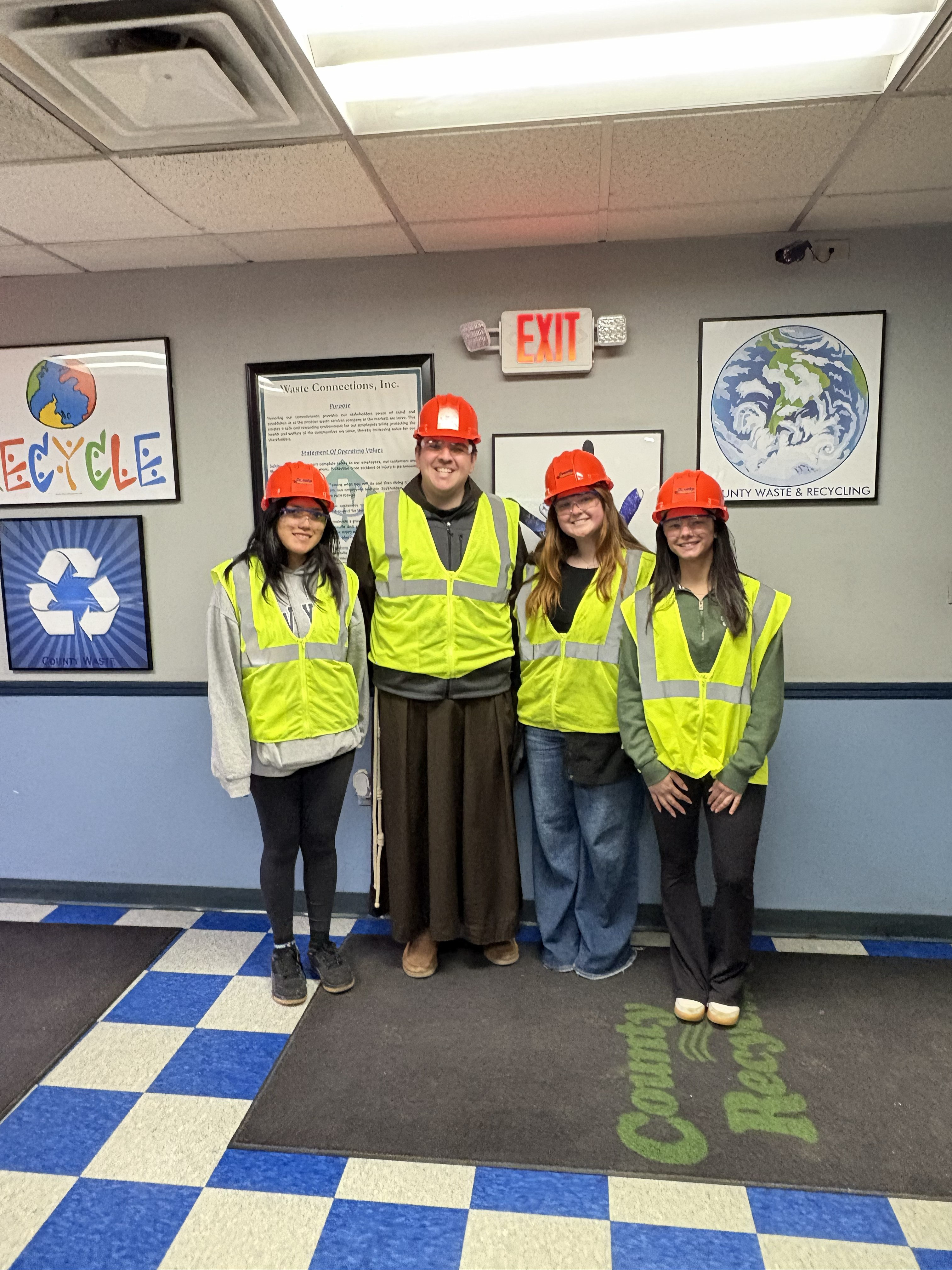
At Siena, students, facilities, and faculty alike share a genuine concern for recycling and sustainability. This is reflected in the mission of the Laudato Si’ Center, which emphasizes care for creation as a shared responsibility across the community. In that light, the patterns I have observed across campus suggest that the central challenge is not a lack of concern, but how that concern is translated into daily practice and supported through clear systems.
Looking ahead, this project will focus on turning what I have observed into practical, realistic steps for Siena. A key part of that is addressing misinformation through greater education and visibility, particularly by helping students better understand what actually happens to waste after it leaves campus. I hope this information sheds light on that and helps foster a community that values recycling. More importantly, I hope it encourages reflection on what each of us can do on campus to bring our passions to life.