Interfaith Discussion on Caring for Our Common Home: Christian-Muslim dialogue
Date: March 24, 2026
Time: 7:30PM
Location: SSU 240-Maloney Great Room (Siena Campus Map Building #9)
livestream and recording: CLick here to watch live or the recording
Event Description
The Laudato Si’ Center for Integral Ecology, the Beatrice & Sidney Albert Interfaith Lecture Series Board, the Damietta Cross-Cultural Center, and the Religious Studies Department are co-sponsoring an evening discussion focusing on religious and ethical perspectives related to climate change. Two religious documents will be discussed: Pope Francis’ encyclical “Laudato Si’”, and a document by Muslim clerics and scholars, “Al-Mizan”.
Meet the speakers

Imam Saffet Catovic
The Bosnian War had a profound impact on Imam Saffet Catovic. In fact, it changed the trajectory of his life. Bosnian by descent, Catovic found himself working in various capacities with the Bosnian government as a diplomat to provide assistance during the war. “I came to the conclusion that there needs to be a better way for different religious and ethnic groups to deal with one another—to find some level of normalcy in the chaos of war and its aftermath,” he said. “I began to think if there’s a way to engage in a new type of dialogue to allow that to happen. Interfaith dialogue is not only about conversation, it’s about working through things together for the future, often through pain and grief and across differences, because you have no place to go and neither do they.”
This work led him to Drew, earning his Master of Arts in Religion (MAR) with a concentration in Religion & the Environment. He has since returned to Drew to earn a DMin with a concentration in Pilgrimage & Spirituality.
While at Drew as a MAR student, Catovic realized that environmental activism was an area he wanted to explore. In addition to his environmental focus at Drew, he also participated in a fellowship training program with GreenFaith, an organization introduced to him by his advisor, Professor of Ecology, Religion and Society Laurel Kearns.
“Often a major driver for conflict is connected to issues of natural resource extraction and control,” said Catovic. “All these pieces began to come together. If you want to address interfaith and interethnic violence, chances are there are underlying economic and resource issues driving the conflict that need to be resolved equitably. War itself not only results in destruction of human life as well as homes and civilian and religious objects, but also results in forced dislocation—migration, trauma and suffering. I realized the environment is an area where religions and spiritual traditions have sacred resources and teachings that allow us to revisit and reimagine our way of being the world and to choose a more just, equitable, sustainable, and peaceful future.”
Catovic realizes that those on common ground deal with common environmental issues. “Global warming and greenhouse gas emissions do not know borders,” he said. “Environmental issues and impacts are always in the background and increasingly in the foreground of all our lives.”
“In day-to-day life, people learn to work and live together in the most difficult of circumstances while having divergent views of the world and worship in different ways. My desire is to distill the lessons of that practical day-to-day experience and bring it to the level of political and theological discourse and decision making that are impacting people’s lives.”
Catovic’s Islamic environmental work has steadily increased in scope and depth and has a long history of service in interfaith environmental justice organizations, including GreenFaith since 2009, where he serves as a senior Muslim advisor. He is a founding board member of the Islamic Society of North America’s Green Initiatives, consultant to the drafting committee of the Islamic Declaration on Global Climate Change, founding member of the Global Muslim Climate Network, co-drafter of the Fiqh Council of North America “Fatwa” Religious ruling on fossil fuel divestment.
Catovic is currently is the director of UN operations for Justice For All, a faith-based human rights organization. He volunteers his services as the Imam and Muslim chaplain at Drew, and is a member of the University’s Religious Life Council. “Environmental and climate justice is an important way for religious congregations and spiritual communities to get together on campus to address the existential threat of climate change to all life on earth and to begin to heal through conversation and joint collaborative action.”
Additionally, Catovic serves as a member of the board of trustees of the Parliament of World’s Religions. “My environmental justice involvement is connected to my experience and education at Drew and my GreenFaith work,” said Catovic. “The Parliament is the oldest global interfaith organization and the start of the global interfaith movement. Its mission to bring about a more just, peaceful and sustainable world has sought to uplift the climate emergency and to work in a collective, multi-faith way to address it.” Catovic was a contributor to Faiths for Earth: A Call to Action, published by the U.N. Environment Programme and the Parliament of the World’s Religions.
Catovic is a member of the scholarly drafting team to the groundbreaking Al-Mizan: A Covenant for the Earth, the brainchild of Islamic eco theologian Fazlun Khalid. Al-Mizan presents an Islamic outlook of the environment in a bid to strengthen local, regional, and international actions that combat climate change and other threats to the planet. The work has been described as the Islamic equivalent to Pope Francis’ Laudato Si (climate encyclical) and Laudate Deum (apostolic exhortation).
“We wanted it to be reflective of the universal faith community of muslims around the world. It is inclusive of the wide range of voices and theological perspectives as represented by one fourth of the world’s population. ”
Catovic knows the importance of empowering people through education, noting the importance of Drew’s Global Faiths & the Earth course, required of many Theological School students. The course lays the foundation work of interfaith communication, coalition-building, and leadership by exploring the respective attitudes and practices of various faith traditions toward the earth and the shared challenge of the current environmental crisis.
“Drew keeps coming back and forth into my life,” he said as he recalled sharing a podium with fellow activist and Drew alum, the Rev. Dr. William Barber III T’03, co-director of The Poor People’s Campaign at a rally in Washington, D.C. “All of the social and racial justice work is connected to environmental and climate justice.”
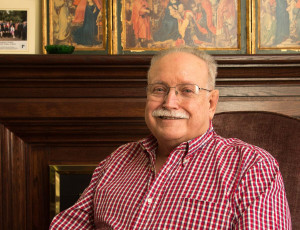 Rev. Elias D. Mallon, PhD
Rev. Elias D. Mallon, PhD, a native New Yorker, is an ordained member of the Franciscan Friars of the Atonement (Graymoor). He obtained a licentiate degree (STL) in Old Testament studies and a PhD in Middle Eastern languages from the Catholic University of America. He researched and wrote his dissertation at Eberhard Karls Universität in Tübingen, Germany. Fr. Mallon taught Old Testament at the Washington Theological Union and American University in the Washington, DC. He taught ancient Near Eastern languages the University of Washington in Seattle, WA. He also worked for the then Vatican Secretariat for Promoting Christian Unity (now Pontifical Council for Promoting Christian Unity) as its faculty representative at the Institut Œcuménique of the World Council of Churches in Bossey, Switzerland. From 1989-2001 he was Director of the Graymoor Ecumenical & Interreligious Institute in New York City. He has been involved in the Roman Catholic/Christian-Muslim dialogue on the local, national and international level since 1985 and has published several articles and two books on Islam. The first was Neighbors: Muslims in North America (New York: Friendship Press, 1989) and his latest book is entitled Islam: What Catholics Need to Know (Washington, DC: National Catholic Education Association, 2006) which won second prize in the 2006 Catholic Press Association Awards in the category “Professional Books.” At present Elias is the Education and Interreligious Affairs Officer at the Catholic Near East Welfare Association, where among other things he represents the Association at the UN.